154%
Product
Capacity Planning Dashboard
Company
Salesforce
Role
Product Designer
Year
2025
Overview
I led the product design for the Capacity Planning effort, which gives field service Planners peace of mind when planning months ahead for a large workforce.
the problem
Salesforce Field Service powers enterprise-scale operations; utility companies, telecom crews, HVAC fleets. Within those organizations, the Dispatcher assigns today's jobs. The Field Technician shows up and does the work. But the Planner; Sam; is responsible for making sure there are enough people to show up, weeks and months from now. When the Dispatcher's horizon is a few weeks at most, Sam is the only one looking further ahead. And until now, she's been doing it blind.

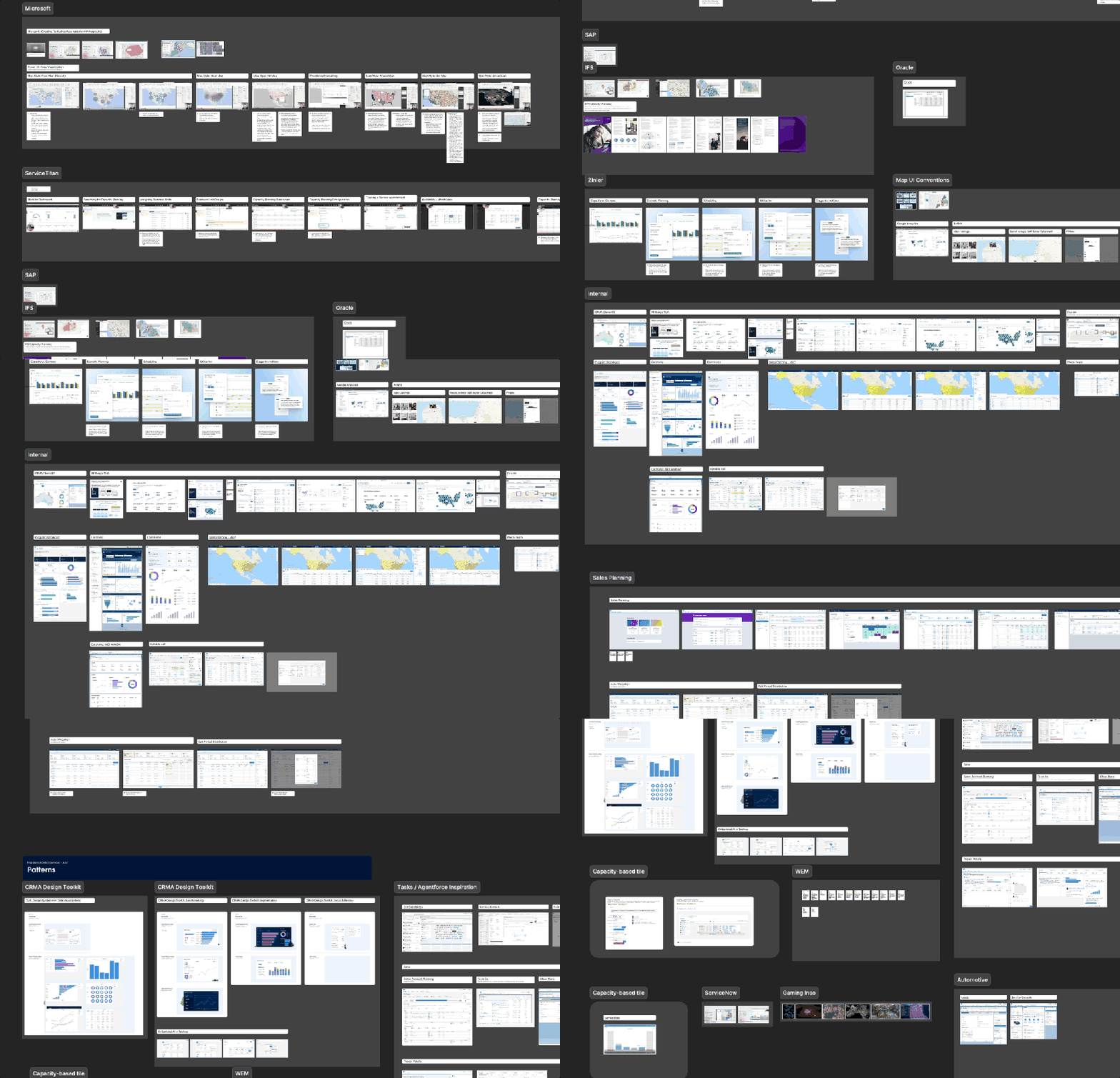
Competitive Audit
Before designing anything, we needed to understand the landscape Sam was navigating; not just what competitors offered, but how the entire enterprise capacity planning space was failing her. The audit made clear what signals were missing and where the real gap between software and reality lived.
connecting with users
The Planner isn't a cut and dry role. They can be a utility operations lead in Texas during wildfire season or a telecom planner managing mutual aid agreements after a hurricane. We mapped their workflows, their pain points, and the moments when the job became impossible. What emerged wasn't a list of feature requests; it was a picture of a role that had been set up without the right tool to ensure success.
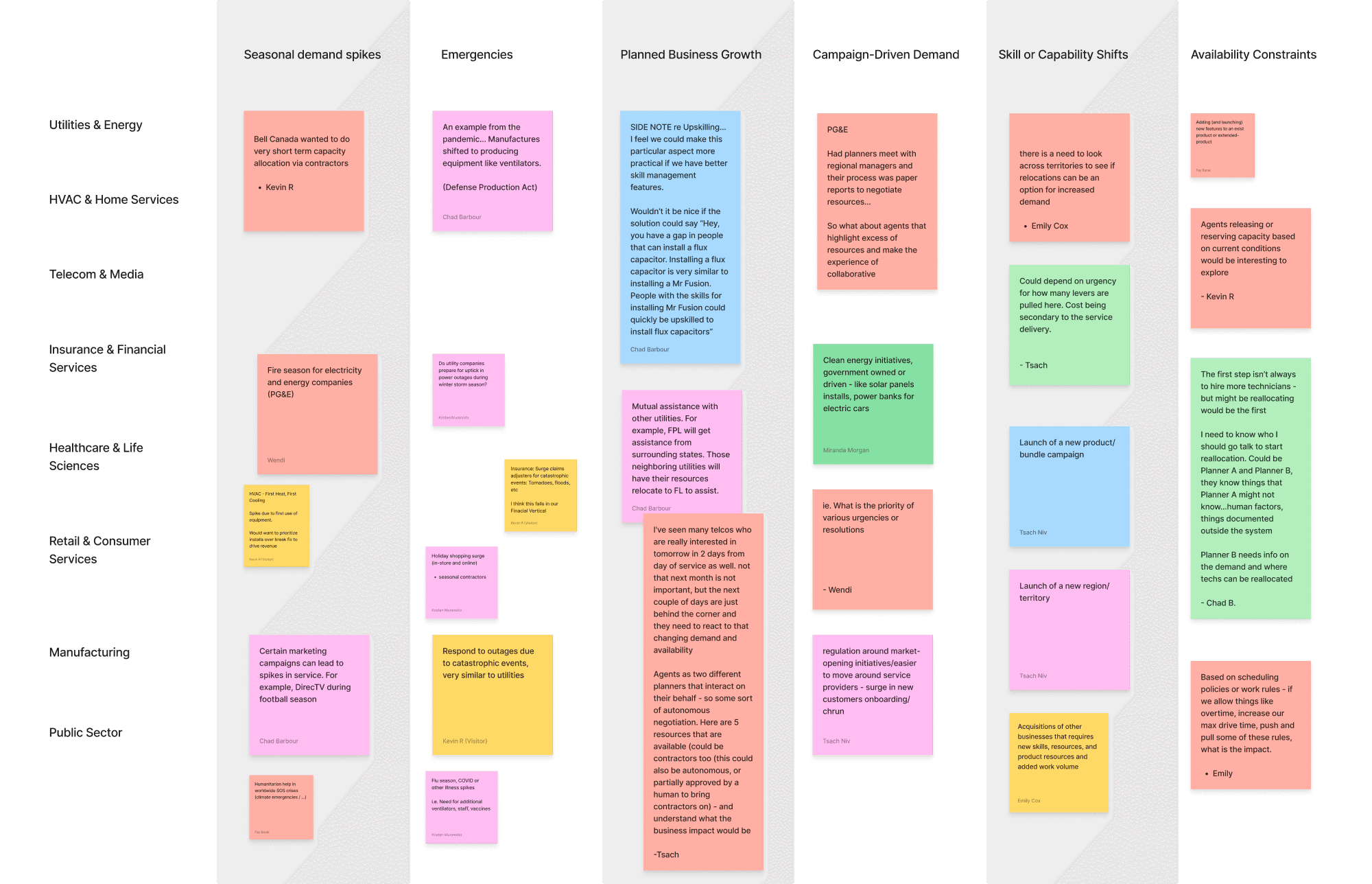
Affinity mapping workshop that I co-led and included participants from several teams including Product, Design and Research.
what research revealed
We used Claude and NotebookLM to synthesize hundreds of data points; customer VOCs, Solution Engineer interviews, UX research documents and meeting records into clear, actionable themes. Here is what the data kept saying:
Power outages during storms
Mutual aid agreements between utilities share resources but spike demand.
Humanitarian aid during crises
Companies respond to worldwide SOS crises, such as climate emergencies.
Annual, advertised events
Marketing campaigns and holiday shopping cause service demand spikes.
Autonomous negotiation
Enable AI agents to interact as planners that negotiate between organizations.
Upskill management
Identify skill gaps and training needs; provide pathways for upskilling.
Allocation based on urgency
Measure and prioritize according to urgency of work and service needs
Inefficient scheduling isn't a minor inconvenience for Sam. It compounds. Overtime costs mount, repeat visits erode customer trust, and reactive crisis management becomes the default mode of operation. These numbers aren't hypothetical. They're what the industry accepts as normal.
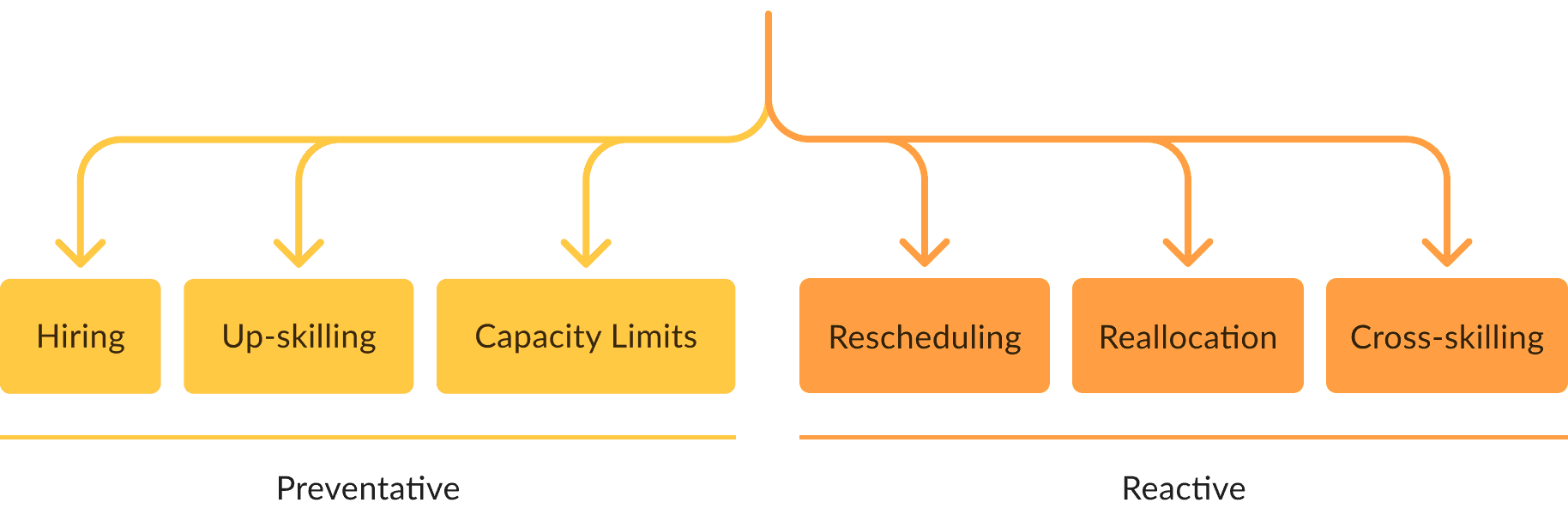
There are two ways Sam can respond to a capacity gap: prevent it from forming, or react when it arrives. Capacity Limits was our first step into Preventative gap resolution; It was also a high-impact, low-scope starting point and it was foundational to solving the larger scope of Capacity Planning.
How can Planners resolve Capacity Gaps?
proof of concept
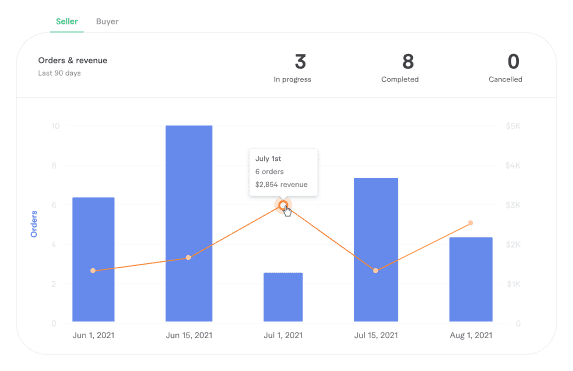
The Capacity Limits Dashboard wasn't the endgame. It was the proof of concept. A daily and weekly view that let Sam compare consumed hours against limits, at a glance, across work types. For the first time, she had something to look at before the storm arrived, not after.
The Capacity Limits dashboard was Sam's first real signal. It proved the concept before we built the system.

Before finalizing anything, we mapped every boundary condition Sam might face: overlapping territories, skill mismatches, demand spikes, partial outages. All to make sure the design held up under real-world pressure.
the final design
The final Capacity Planning dashboard was designed around a single principle: Sam should be able to land, understand her situation, and take action without friction. The AI Gap Resolution Agent is there to take on the load; with guardrails Sam controls.
Capacity Planning was a large-scale effort spanning several teams within Salesforce Field Service. I’m incredibly proud of this team effort.
The product matured from a Capacity Limit focus to a Planner-first operational dashboard that can bridge the gap during emergencies and other large-scale events for our customers
Upon launch Capacity Planning saw immediate partnerships with 2 enterprise design partners
An agent-based capacity gap resolution flow was presented to the CEO of Salesforce (Marc Benioff) within a few months of launch
Improved stakeholder alignment through SE and planner workshops, translating field realities into product-ready requirements